
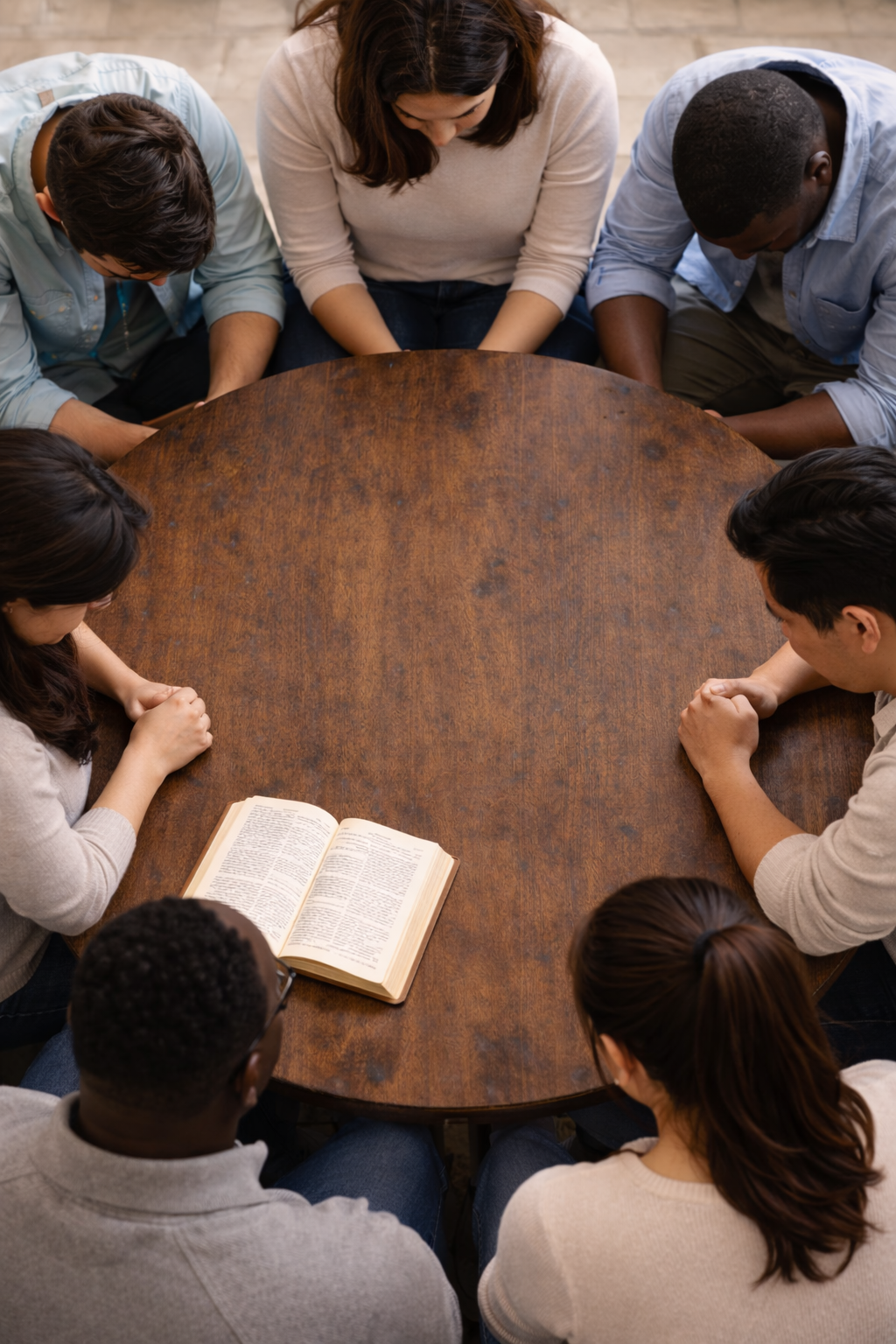
Chosen Generation: Called Out to Proclaim His Praise
1 Peter 2:9-10
“But you are a chosen generation, a royal priesthood, a holy nation, His own special people, that you may proclaim the praises of Him who called you out of darkness into His marvelous light; who once were not a people but are now the people of God, who had not obtained mercy but now have obtained mercy.”
From Individual to Corporate Identity
Peter has just established that believers are living stones built upon Christ the cornerstone, forming a spiritual house and holy priesthood with direct access to God and spiritual sacrifices to offer. Now he shifts focus from what individual believers are to who we are collectively—a chosen generation with a mission. This isn’t a different identity but an expansion. We are not isolated priests serving alone; we are a community of God’s people united by grace and commissioned for a purpose.
The word “but” signals a dramatic contrast. While the world stumbles over Christ the cornerstone and remains in darkness, you who believe occupy an entirely different position. You are a chosen generation—selected by God from among humanity, set apart for His purposes, equipped with privileges that should take your breath away. Peter piles up five distinct identities, each building on the previous, to help us grasp the magnitude of what we’ve become through Christ.
Five Identities of the Chosen Generation
First, we are a chosen generation. The word “generation” can also be translated as “race” or “kind”—a unique category of people. This chosen generation didn’t exist before Christ; it’s composed of people from every tribe, tongue, and nation united not by ethnicity or geography but by grace (Revelation 5:9). God chose this generation before the foundation of the world, predestining us for adoption as His children (Ephesians 1:4-5). You didn’t choose to be part of this chosen generation through superior morality or religious achievement—God chose you, called you, and placed you here.
Second, we are a royal priesthood. This phrase combines two powerful concepts we’ve explored: we are priests with access to God and spiritual sacrifices to offer, but we’re also royal—sharing in Christ’s kingship. This royal priesthood is not only a priesthood that serves the King but also one that exercises rule, which will be fully seen when Christ comes back to establish His kingdom (Revelation 5:10; 20:6). Even now, this royal identity means we serve from a position of authority and dignity, representing the King of kings in hostile territory.
Third, we are a holy nation. Under the old covenant, Israel was God’s chosen nation set apart from surrounding peoples. But this chosen generation transcends national boundaries—we are a holy nation composed of believers from every earthly nation, a unique people set apart to God (Deuteronomy 7:6). “Holy” means different, distinct, separated for sacred purposes. While the world operates by one set of values, the chosen generation lives by another. While culture celebrates certain behaviors, this holy nation abstains. While society chases temporal goals, we pursue eternal ones. Our holiness isn’t achieved through effort but received through Christ—yet it must be lived out daily through obedience (1 Peter 1:15-16).
Fourth, we are His own special people. The Greek literally means “a people for possession”—people belonging to and serving Him. The chosen generation doesn’t belong to ourselves, to cultural movements, to political parties, or to human leaders. We are God’s exclusive property, purchased at infinite cost, treasured beyond measure (1 Corinthians 6:19-20). This isn’t restrictive ownership that diminishes us but loving possession that defines and dignifies us. We are special—not because of inherent superiority but because of Whose we are.
Fifth, we are proclaimers of God’s praise. This is the purpose clause—the reason God chose this generation, made us royal priests, set us apart as a holy nation, and claimed us as His special people. It’s all for this: “that you may proclaim the praises of Him who called you out of darkness into His marvelous light.” We exist to share with the world something not known—God’s excellencies, virtues, and qualities. The chosen generation is a megaphone for God’s glory, amplifying His character to a world that doesn’t know Him.
What Are We Proclaiming and Praising?
Peter gives three specific reasons the chosen generation should proclaim God’s praise—three miraculous realities that demand response:
First, we are called out of darkness into light. Before salvation, we lived in spiritual darkness—blind to truth, enslaved to sin, ignorant of God’s character, stumbling toward judgment (Ephesians 2:1-3). But God called us out of that darkness into His marvelous light—the brilliant, life-giving illumination of truth, freedom, and eternal life. This isn’t a gradual transition from dim to bright; it’s a radical extraction from one kingdom to another (Colossians 1:13). The chosen generation knows the difference between darkness and light because we’ve experienced both. We proclaim His praise because we remember where we were and marvel at where we are.
When you grasp that you were blind but now see, dead but now alive, lost but now found—praise becomes inevitable. The chosen generation doesn’t praise God out of religious duty but from genuine gratitude for deliverance. Every time we share our testimony, explain the gospel, or simply live in a way that reflects light rather than darkness, we proclaim His praise to those still stumbling in the dark.
Second, we were once not a people but are now the people of God. This language echoes Hosea’s prophecy about Israel’s restoration, but Peter applies it to the church—the chosen generation composed of both Jews and Gentiles (Hosea 1:9-10; 2:23). Before Christ, we had no corporate identity, no unified purpose, no family connection. We were isolated individuals pursuing our own agendas, disconnected from God and each other. But now we are the people of God—a unified body, a spiritual family, a covenant community bound together by grace.
This transformation from “not a people” to “the people of God” should produce profound praise. The chosen generation celebrates not just individual salvation but corporate belonging. We’re not spiritual lone rangers operating independently—we’re part of something larger, connected to believers across time and space. When the world sees isolated individuals transformed into a unified people characterized by love, sacrifice, and mutual support, they witness something supernatural that proclaims God’s power to reconcile and unite (John 13:35).
Third, we had not obtained mercy but now have obtained mercy. This is perhaps the most staggering reality the chosen generation proclaims: God’s eternal mercy. Peter distinguishes between God’s general mercy shown to all creation every day—the sun that rises on the just and unjust, the rain that falls on righteous and wicked—and the eternal mercy He has gifted to His church by forgiving their sins and removing eternal judgment (Matthew 5:45).
Every human being experiences God’s common grace and temporal mercies. But the chosen generation has received eternal mercy—mercy that doesn’t just postpone judgment but eliminates it completely, mercy that doesn’t just forgive a few sins but washes away all guilt, mercy that doesn’t just improve our situation temporarily but secures our destiny eternally. This eternal mercy cost God His Son. It required the cross, the shedding of righteous blood, the sacrifice of infinite worth. The chosen generation proclaims this mercy not because we deserve it but because we’ve received it—and receiving such mercy makes silence impossible.
Proclaiming His Praise in a Dark World
Understanding who we are as the chosen generation—chosen, royal, holy, special, proclaimers—should radically transform how we live. We’re not saved to retreat into comfortable Christian bubbles but commissioned to engage a dark world with the light we’ve received. Every aspect of our lives should proclaim God’s praise, making His excellencies visible to those who don’t yet know Him.
Proclaiming through lifestyle: When the chosen generation lives with integrity in a corrupt world, exercises self-control in a culture of excess, shows kindness to enemies, remains joyful through suffering, and maintains hope despite circumstances—we proclaim God’s transforming power without saying a word (1 Peter 2:12). Our lives should pose questions in others’ minds: “Why are they different? What do they have that I don’t?”
Proclaiming through testimony: The chosen generation must be ready to verbally explain the hope we possess when people ask (1 Peter 3:15). We share our before-and-after stories: once darkness, now light; once isolated, now family; once condemned, now shown mercy. Personal testimony is a powerful proclamation because it’s irrefutable—you lived it, you know it, and no one can argue with your experience.
Proclaiming through evangelism: The ultimate proclamation of God’s praise is sharing the gospel—clearly explaining sin’s problem, Christ’s solution, and the invitation to join the chosen generation through faith. This isn’t just the pastor’s job or the evangelist’s specialty; it’s the calling of every member of the chosen generation. We who have obtained mercy must plead with those who haven’t: “Be reconciled to God!” (2 Corinthians 5:20).
Living Worthy of the Calling
Being part of the chosen generation brings both incredible privilege and weighty responsibility. We bear five identities that should humble and embolden us simultaneously. Chosen—not because we deserved it but because God loved us. Royal priesthood—serving with dignity while anticipating future reign. Holy nation—distinctly different from surrounding culture. Special people—belonging exclusively to God. Proclaimers—commissioned to broadcast His excellencies.
When you forget these identities, you’ll live like the world, stumble over priorities, and waste your life on temporary pursuits. But when you remember who you are—when you grasp that you’re part of a chosen generation called out of darkness for divine purposes—everything changes. You live with confidence, purpose, and gratitude. You proclaim His praise not from obligation but from overflow. You represent God faithfully because you know both where you came from and where you’re going.
Peter’s emphasis on corporate identity reminds us that we’re stronger together than apart. The chosen generation isn’t a collection of isolated individuals but a unified people, a holy nation, a royal priesthood functioning in concert. We need each other for encouragement, accountability, mutual service, and combined witness. When the chosen generation gathers, we remind each other who we are. When we scatter, we demonstrate to the world what grace accomplishes.
Reflection Questions
- Which of the five identities Peter lists (chosen generation, royal priesthood, holy nation, special people, proclaimers) most encourages you right now? Which one challenges you most to live differently?
- How does understanding that you were called “out of darkness into light” change your perspective on your salvation? Do you still remember what the darkness was like, and does that memory fuel gratitude and urgency to reach others still in darkness?
- In what specific ways does your life proclaim God’s praise to watching unbelievers? If someone observed your work ethic, relationships, use of money, and response to difficulty, what would they conclude about the God you serve?
- Peter emphasizes that we “were not a people” but now “are the people of God.” How actively are you participating in the life of this corporate body—the church—rather than living as an isolated individual? What would it look like to more fully embrace your identity as part of God’s chosen generation?
Prayer
Consider the radical transformation God has accomplished—calling you out of darkness into light, making you part of His people when you had no people, showing you eternal mercy when you deserved judgment. Thank Him for including you in the chosen generation.
Understanding your identity as part of God’s chosen generation should transform how you pray and engage with Him. If you’re longing for deeper, more confident conversations with God rooted in who He’s made you to be, our free 7-day prayer prompts guide will help you pray from your true identity in Christ.
Leave a Reply